



Practical guide
Managing tasks created by distribution exceptions
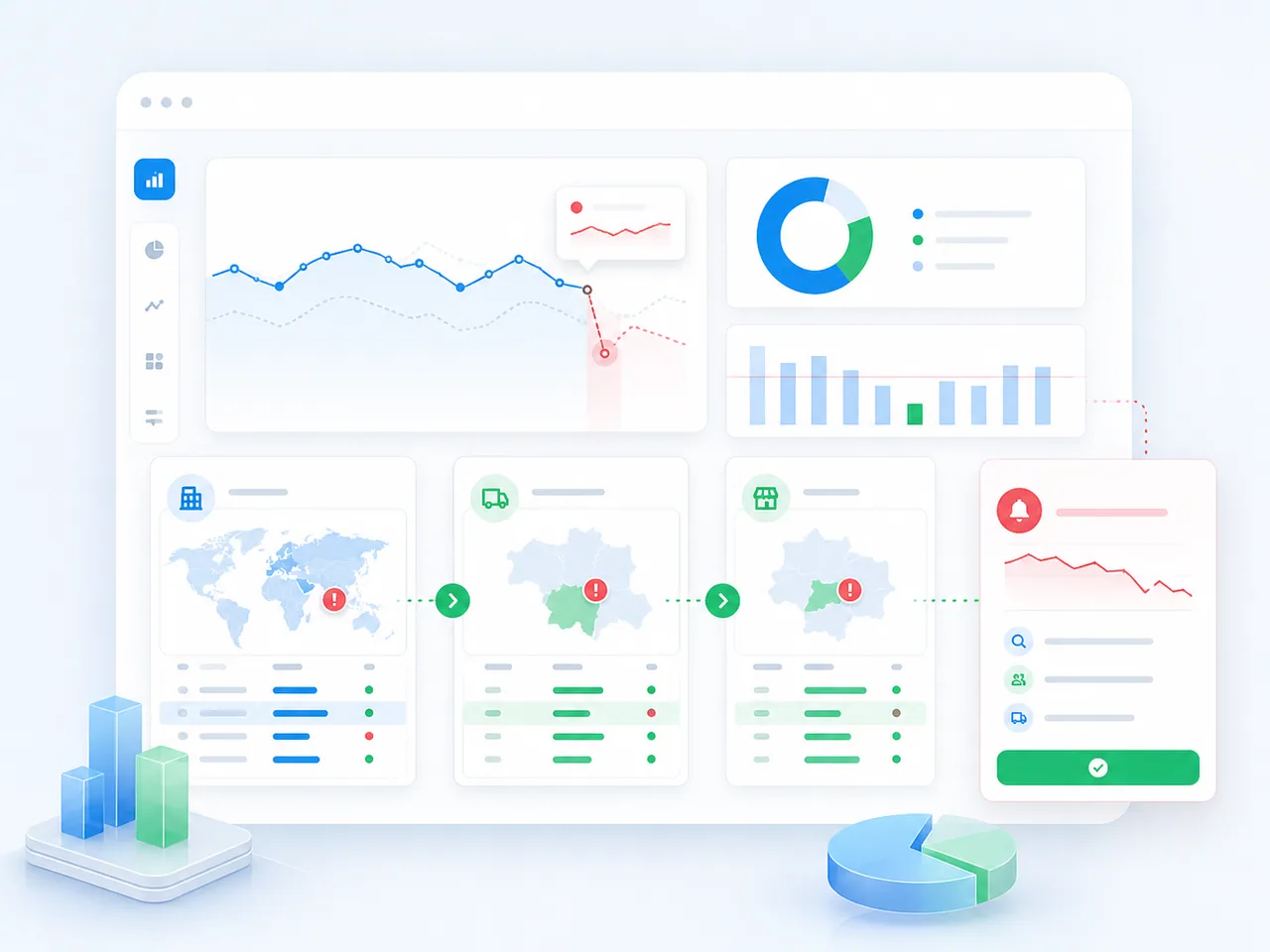
An exception task connects a process signal to one owner, a due point, expected evidence and verification. A report then becomes the start of a management action rather than the end of the process.
- Task Management and Execution
- SV-Cluster: credit checks and verified visits
- Distribution Group Management
In detail
For sales leaders, supervisors, operations and finance teams, this article explains how to take an exception through to a verifiable result. A notification reports a situation; a task defines an action, an owner and a completion condition. Not every signal needs its own task: first check that the fact is current and that the team has an action it can take.
Before assigning work, check the object, observation time and source. Stale stock, a cancelled document or a repeated transmission can produce a false exception. Link repeated signals for the same object and condition to an existing open task under an agreed rule. Keep a new occurrence after confirmed recovery separate, with a link to the previous case.
One person should own the result, while several people may contribute. Set priority by customer and operational impact, and agree a feasible completion time. If stock, access or authority is missing, record the blocker, next owner and review time. Moving the due time or escalating a task does not resolve the underlying exception. When responsibility changes, record the new owner’s acceptance, the current status and the next action. Changing a name on the task does not itself confirm a handover; responsibility for the next step must remain clear until acceptance.
Check evidence against the original object, criterion and time. A photo shows only the visible condition within the frame; it does not by itself prove the cause or continued product availability. A promise to pay confirms an agreement, not debt settlement; a new exchange status must be linked to processing the intended document.
Completing an action and restoring the process are different outcomes. For example, agreeing a payment date may complete a task while the debt remains open. If the task requires resolving an exception, the verifier confirms a new fact, returns the result for rework or records an authorised exception with a reason and expiry. Missing fresh data does not count as successful verification.
To discuss the workflow, prepare an anonymised exception example: the original signal, action history, result evidence and a repeat occurrence if there was one. Separate symptoms from testable hypotheses about causes. Check a rule change against comparable cases: fewer notifications alone do not prove that the process improved. Assignment, duplicate handling and automated verification settings are agreed for the project.
How it is applied
- Choose one exception and collect its source object, observation time, action history and available evidence.
- Agree when to create a task, how to check data freshness and how to group repeated signals.
- Name the owner and contributors, priority, realistic completion time and escalation path. Agree how a new owner accepts a handover and who remains responsible until then.
- Define the completion criterion, verifier and acceptable evidence; state separately what does not prove the result.
- During the pilot, test a repeat signal, an overdue or blocked task, rejected evidence and a new occurrence after closure.
Practical checklist
- The signal links back to its original process fact.
- The task has one owner and a clear completion criterion.
- Closure requires evidence appropriate to the exception type.
- Recurring causes are available for analysis and rule changes.
Scope and limits
Process-linked tasks are not a replacement for general project management. They apply to distribution exceptions with an identifiable fact, owner and verifiable result.