



Practical guide
Planning the year with your manufacturer? What to prepare before the new contract
Secondary-sales reporting is easier to agree before the contract is signed than to assemble by hand all next year. Below is what to prepare in advance and how much time to allow.
- Distributor Sell-out and Inventory Visibility
Why prepare before the contract
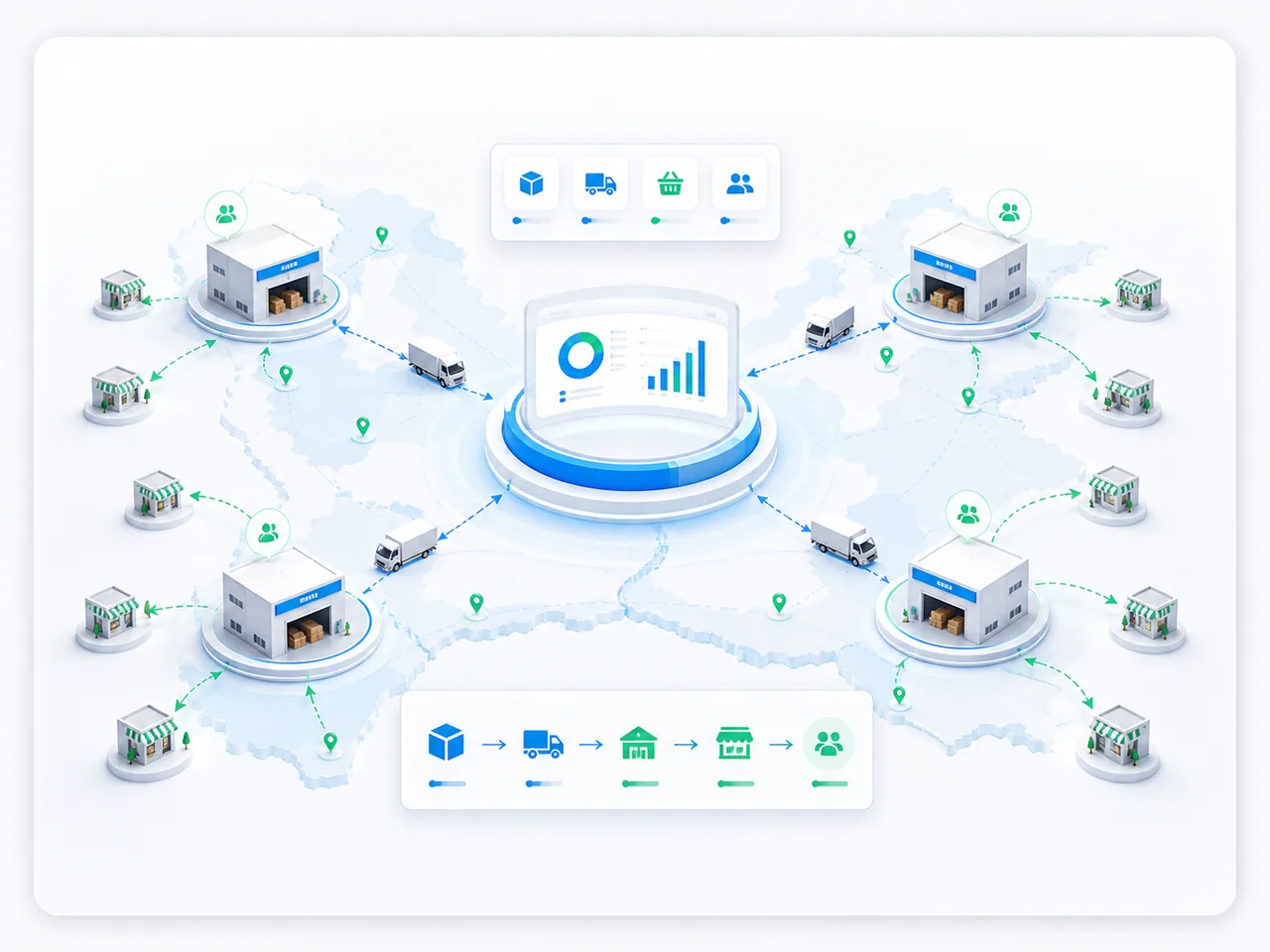
A manufacturer may require its distributor to run SFA and send regular secondary-sales reports: sales by outlet and SKU, and stock.
If the report scope and delivery method are not discussed before signing, the report is assembled by hand: exports from the accounting system, a month-end spreadsheet, reconciliation by phone. Bonuses are then discussed on different data.
What to prepare before the negotiation
Five questions worth answering before you meet the manufacturer:
- Report scope and frequency: which figures, at what level of detail and how often the manufacturer needs them;
- Data source: where sales and stock come from - ERP, DMS or a governed file in an agreed template;
- Master data: SKUs, outlets, warehouses and units of measure mapped to the manufacturer’s codes;
- Checks: who is responsible for freshness, completeness, duplicates and dates before the report is sent;
- Access: which data the manufacturer sees and which stays with you only.
The agreed answers become the exchange rules: after that, nobody assembles the report by hand.
How it works in Smartup and how much time to allow
- Outlet and SKU sales come from daily work: orders and shipments in the system;
- The manufacturer report comes from the same data: scope and frequency are agreed once;
- Access is role-based, and the data scope for the manufacturer is fixed in the project.
With source data ready, the workflow defined and owners assigned, the first productive scope can launch from four weeks. The actual timeline depends on modules, integrations, migration and acceptance criteria. That is why preparation is best started before the contract takes effect.
Scope and limits
Every manufacturer has its own reporting requirements. This article describes typical preparation, not the terms of a specific contract.